What is the Sherry Triangle?
Anyone familiar with Sherry Wines will know the concept of the Sherry Triangle – the three historic towns of Jerez de la Frontera, El Puerto de Santa Maria and Sanlucar de Barrameda - all located in the province of Cadiz in south-western Spain, where these unique wines are made.
The three points form a geographical triangle: Jerez inland, Sanlucar on the Guadalquivir estuary, and El Puerto de Santa María on the Atlantic coast. Each has its own distinctive climate and landscape, but all using the same grape varieties: Palomino, Moscatel and Pedro Ximenez.
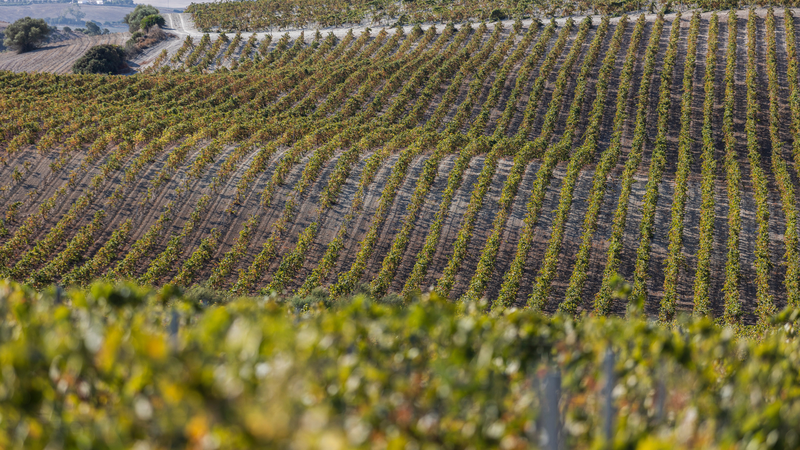
Where are Sherry grapes grown?
For centuries, the vineyards surrounding these towns have been planted with vines that flourish in chalky albariza soils, enjoying year-round Andalucian sunshine, mild winters and cooling coastal breezes. The grapes cultivated to produce Sherry Wines were always grown in a wider area, extending beyond the Sherry Triangle: 7,000 hectares of plots stretching from inland Lebrija in the north-east to Chiclana in the south, where coastal terroir consists of sandy soil.
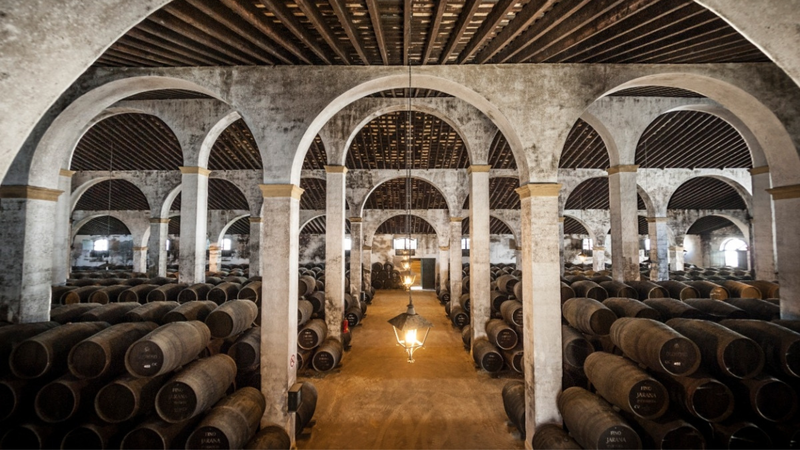
Where can Sherry be aged?
Until recently, the all-important ageing process of these protected wines, known as the criaderas y solera, could only be carried out within the Zona de Crianza - the three towns of the Sherry Triangle. This rule was formalised nearly a century ago when the Jerez-Xérès-Sherry Denominación de Origen (D.O.) was established in 1933, as Spain’s first such protected designation.
In 2022, a historic change was approved by the Sherry Regulatory Council: Sherry Wines can now be aged in a wider, decagonal area – across all 10 municipalities where the grapes are already grown. This regulatory expansion of the Sherry Wines framework marks a major evolution for the region, enabling greater diversity and innovation while preserving its heritage.
New towns join the family
This newly-defined area of both viticulture and ageing – the two essential stages in the production of Sherry Wines – embraces 10 municipalities of the wider Marco de Jerez region, known for their beautiful beaches, historic towns and vibrant flamenco. Rich in culture, the “Sherry Decagon” delimited zone draws visitors to enjoy the Andalucian lifestyle with its magnificent purebred horses of Jerez, seafood of Sanlúcar, Chipiona, Rota and Chiclana, medieval castle of El Puerto de Santa Maria, and wetlands of Trebujena and Puerto Real; Lebrija is the only town outside Cadiz province, in neighbouring Seville. Across the region, bodegas welcome visitors to discover the art of Sherry-making with guided tours and tastings, while festivals bring top musical talents during the summer months.
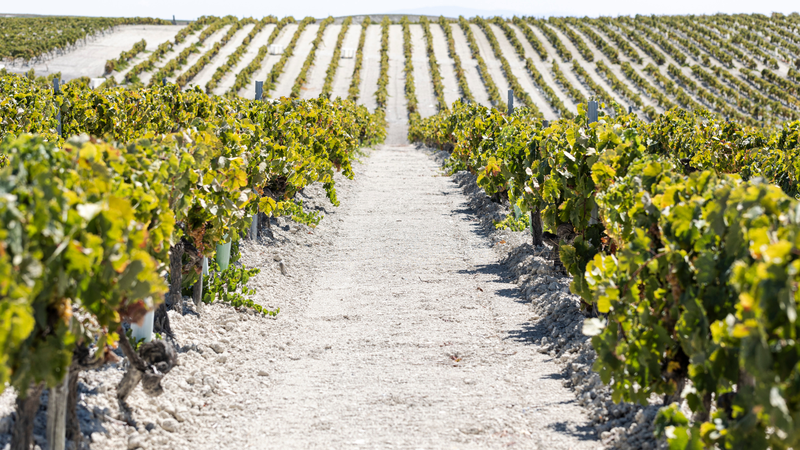
How is sherry made?
The vineyards lie on low, rolling hills of pale albariza soil which retains moisture during hot summers, while coastal areas are characterised by sandy terroir. From these hills the Atlantic Ocean is visible – its cool, humid night breezes influence both the vines and bodegas, where the Sherry Wines are made. After fortification, ageing takes place in 500-litre American oak casks following either biological (under a layer of yeast called flor) or oxidative aging. These years in the wooden casks allow the wine to develop rich, intense flavours and depth, from crisp, bone-dry Fino, to nutty Amontillado, aromatic, golden Oloroso and dark, sweet Pedro Ximénez (PX).
What has changed and why does it matter?
In 2022, when the Sherry Regulatory Council voted to extend the ageing zone, this meant that bodegas outside the Sherry Triangle could age wines in their own facilities. The entire wine-making process cycle — cultivation, ageing, and bottling — can now be carried out in all 10 municipalities, thereby increasing diversity of terroir and microclimates (although in two of the towns, Puerto Real and San José del Valle, there are no bodegas as yet). As a result, the range of Sherry Wines is wider and more nuanced, with more flavour profiles, while still reflecting the region’s authenticity and quality.
What are the 10 localities of the new Sherry-making region?
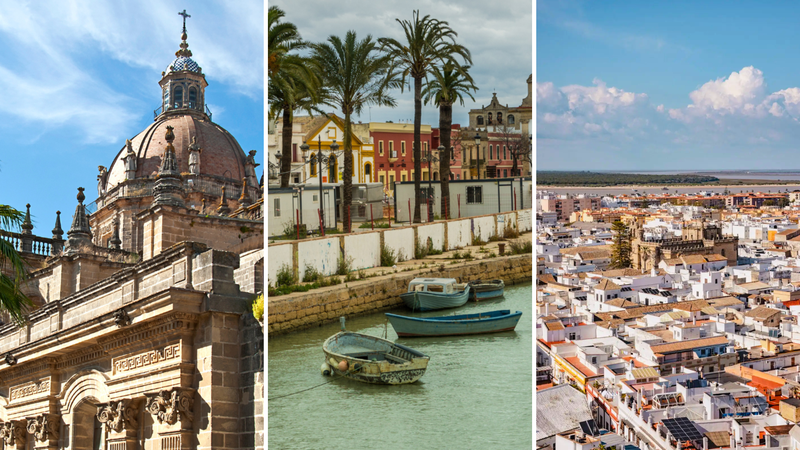
Jerez de la Frontera
This town – known as “Seris” under Muslim rule, the origin of the English “Sherry” – is the historical and cultural heart of the region. Its annual Vendimia (grape harvest festival) is celebrated in early September, while tabancos are traditional Sherry bars where the wines are served straight from the cask - sometimes accompanied by flamenco. Jerez has been named Spain’s Gastronomic Capital for 2026.
Sanlúcar de Barrameda
Divided into the Barrio Alto and Barrio Bajo (High and Low Neighbourhoods), this riverfront municipality is the only place where Manzanilla Sherry is made. The town’s unique humid microclimate, between the Guadalquivir river estuary and the Atlantic, lends this wine a unique saline character.
El Puerto de Santa Maria
Situated at the mouth of the Guadalete river, close to Cádiz city, the port town’s wines benefit from Atlantic breezes which lend them a distinct elegance. The “seafood waterfront” is a perfect spot to enjoy a tapa and glass of Fino, while the Campo de Guía district is home to historic bodegas.
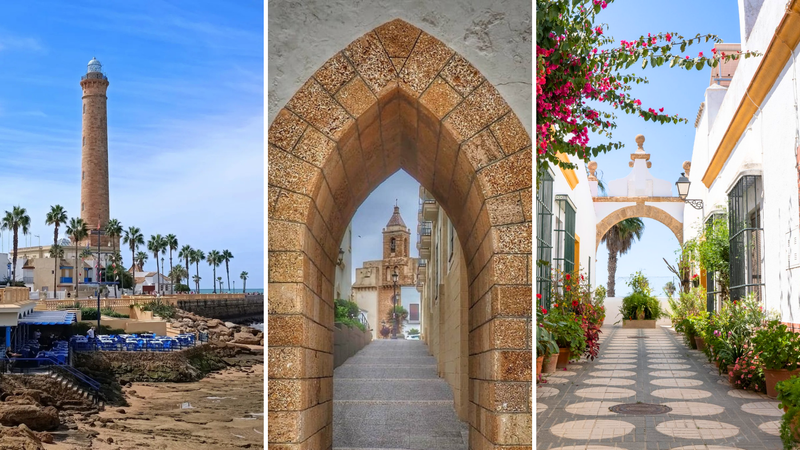
Chipiona
Close to Sanlúcar, the popular beach resort of Chipiona is renowned for its sweet Moscatel (Muscat) wines. The vines of Moscatel de Alexandria (also known as Moscatel de Chipiona), thrive in the area’s sandy soils. These wines are aromatic and floral, with chestnut to mahogany tones.
Rota
Palomino and Moscatel grapes are cultivated in the sandy soils of this coastal town with a mild maritime climate, producing fresh, lightly saline Sherry Wines. Rota is famed for its Urta a la Roteña – sea bream Rota-style, with Fino, tomato and green peppers.
Puerto Real
Across the bay from El Puerto, Puerto Real – meaning Royal Port; it was founded by Spanish Monarchs Isabella and Ferdinand – enjoys centuries-long links to the wine trade. Sitting on protected marismas (salt marshes), it has vineyards but no bodegas currently. The town has transitioned from its shipbuilding industry to rural tourism.
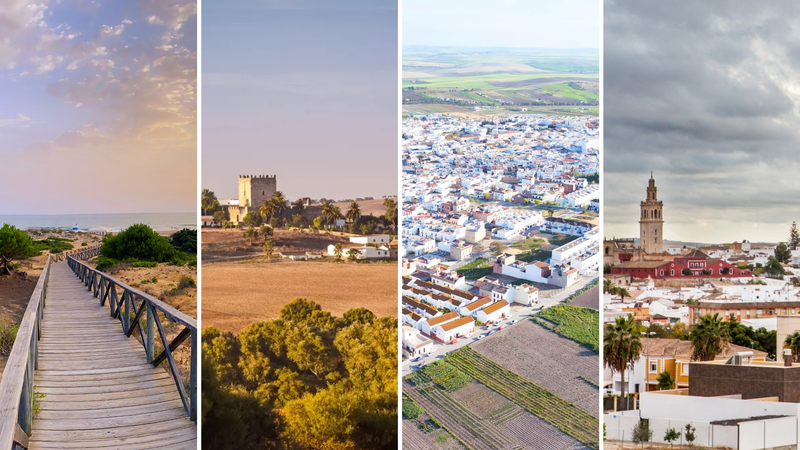
Chiclana de la Frontera
Characterised by its coastal vineyards, this town on the Bay of Cádiz is enjoying a resurgence of its 500-year viticultural tradition which reached its height in the 19th century. Now the town is reasserting its place within the D.O., as smaller producers draw on Chiclana’s heritage to produce wines that reflect distinctive local styles.
San José del Valle
Previously part of the municipality of Jerez, this historic town with Muslim roots is the most geographically isolated, located in the Sierra de la Cabras mountains. Like Puerto Real, it has vineyards but currently no bodegas.
Trebujena
The smallest of the 10 municipalities, Trebujena is surrounded by marismas (salt marshes) and lies close to Doñana National Park. It stands out for its sloping albariza vineyards, and is renowned for its mosto (young wine).
Lebrija
Close to Trebujena, and the only Marco de Jerez wine-making town across the border in the neighbouring province of Seville, this picturesque town is also famous for its pottery. It is situated between the marismas of the lower Guadalquivir and the Sierra Sur mountains.
This significant evolution from the historic Sherry Triangle to the broader, richer region of 10 distinct towns is a symbol of positive change for the Xerex-Sherry-Jerez D.O. Few wines in any country can match the rich heritage and sensory value of Sherry Wines, now with expanded terroirs and nuances to produce a new panoply of wines which will continue to delight for generations to come.


